


What to Do When a Patient Refuses to Lean Back: Tips for Hygienists + Dentists
- Mar 10
- 3 min read
Updated: Apr 2

If you work in dentistry, you’ve definitely had this patient.
You know the one. The patient who walks in, sits down, and says something like, “I can’t lean back.”
As a dental hygienist and ergonomics specialist, this is one of the most common positioning challenges I see clinicians struggle with. Proper patient positioning isn’t just about access—it’s about protecting your neck, shoulders, and back so you can stay in this profession long-term.
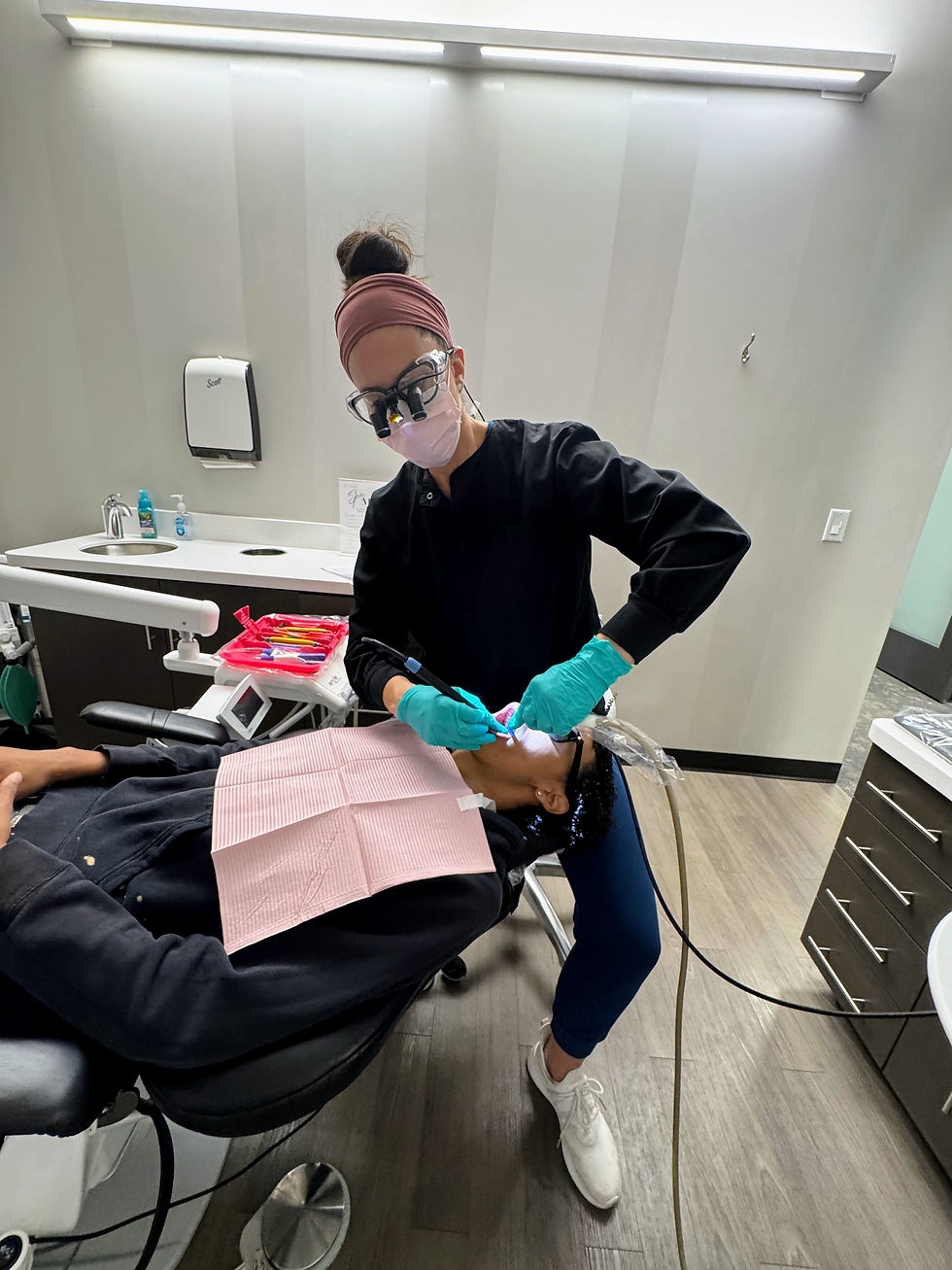
Ideally, when we’re sitting in neutral posture, the patient’s mouth should be about at elbow height. That position allows us to work without rounding our shoulders or leaning forward all day.
But when a patient refuses to recline, it can throw everything off.
Before we get into some strategies that work well in practice, I want to share something that can make a huge difference in patient comfort and positioning.
👉 Right now, I’m offering 10% off my patient positioning cushions with code CUSHION.
These cushions support the head and cervical spine so patients feel much more secure when reclining.
Here’s a quick video showing how I position them in the chair:
Now let’s talk about some practical strategies you can use when a patient resists reclining (I also cover these and everything you need to know to properly position your patient in my patient positioning course)
1. Start with the Lower Arch
If a patient is hesitant to lean back, I usually start with the lower arch first.
The lower arch only requires a semi-supine position, so it feels much less intimidating to the patient. Once they get comfortable, I’ll transition to the upper arch and say something like:
"I’m just going to lean you back a couple inches for a few minutes so I can see the upper teeth better."
Taking it step by step tends to increase compliance.
2. Use the “Pre-Recline” Trick
Another simple strategy is to recline the chair slightly before the patient sits down.
When they sit, they’re already not fully upright. From there, moving the chair further back feels much less dramatic.
3. Try the Slow Lean-Back Method
Instead of asking permission every time you adjust the chair, try reclining gradually while having a conversation.
Ask a question. Lean the chair back slightly. Ask another question. Lean a little more.
Most patients are focused on answering and don’t even notice the chair moving.
4. Stand If a Patient Truly Can’t Recline
If a patient genuinely cannot lean back due to medical limitations, standing can sometimes be the better option.
Standing creates more space and allows you to maintain better posture than trying to sit while hunched forward.
5. Offer Breaks (Even Though Most Won’t Take Them)
I’ll often reassure patients that they can take a break anytime they need to.
Interestingly, once they’re reclined, most patients never ask for the break. They usually just want to get the appointment finished.
6. Use Positioning Cushions for Support
Many patients resist leaning back simply because they don’t feel supported.
Positioning cushions stabilize the head and cervical spine, making the position feel much more comfortable while also helping you optimize the occlusal plane for better visibility and ergonomics.
If you want to learn more about patient positioning, I go much deeper into this inside my Patient Positioning Course, where I walk through positioning techniques step-by-step.
7. Project Confidence
Patients respond to confidence.
When we say something like:
"I need to recline you back so I can see properly and do my best work,"
most patients are completely fine with it.
But if we sound unsure, that’s when they tend to push back.
8. Let Go of Perfection
Sometimes patients just won’t recline, no matter what you try.
In those situations, do the best you can without sacrificing your body. We’re perfectionists in dentistry, but perfect care isn’t possible if we’re working in pain.
9. Offer to Reschedule if Needed
If a patient refuses to lean back and there isn’t a medical reason, it’s okay to offer to reschedule the appointment.
Compromising your posture for an hour can easily turn into days of neck or back pain, and that’s simply not worth it.
Protect Your Body for the Long Haul
Dentistry is physically demanding, but small positioning changes can make a huge difference over time.
Using the right strategies—and the right tools—helps protect your body so you can continue doing the work you love.
👉 My patient positioning cushions are currently 10% off with code CUSHION.
(sale for a limited time)


I am unable to utilize a cordless polisher at the office. What are your thoughts about holding the cord in the non dominant hand during polishing?