


Is Your Dental Stool Causing Your Back Pain? Here's What Every Dental Professional Should Know
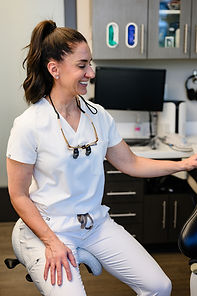
🎥 Before you keep reading, be sure to watch my YouTube video below where I walk you through exactly how to adjust your dental stool for better posture, positioning, and comfort.
Proper stool setup can make a huge difference in reducing strain on your back, neck, and shoulders—and it's much easier to understand when you can see it in action.
⬇️ Watch the video below, then come back for the science behind why it matters.
When most dental professionals think about buying an ergonomic stool, they immediately focus on the price.
"I can't justify spending that much on a stool."
I used to think the exact same thing.
What I didn't realize was that the real cost wasn't the stool—it was not investing in one.
Most dental clinicians spend more than 1,500 hours every year sitting. If your stool isn't properly supporting your body, that's over 1,500 hours of repetitive stress on your spine, hips, and muscles. Those small stresses compound over time, often leading to chronic pain, fatigue, missed work, and sometimes even career-ending injuries.
I learned that lesson the hard way.
About 10 years into my hygiene career, I developed chronic low back pain that slowly progressed from bothering me on Thursdays to showing up within minutes of my first patient on Monday morning. I spent money on physical therapy, chiropractic care, massage therapy, and medical appointments. While each helped temporarily, the pain always returned because I wasn't addressing the source of the problem—my ergonomics.
One of the biggest changes I made was switching to a properly fitted ergonomic saddle stool.
Unlike traditional operator stools that often place the hips in a closed position and flatten the natural curve of the lower back, a properly adjusted saddle stool promotes an open hip angle, supports a neutral pelvis, and helps maintain your lumbar curve. The result is better posture, improved positioning around patients, and less stress on your spine throughout the day.
Just as important as the stool itself is how you adjust it. Your hips should sit slightly higher than your knees, your thighs should slope downward toward the floor, and your backrest—if you have one—should actually support your lumbar spine. Those simple adjustments can make an enormous difference in your comfort and longevity. I cover this step-by-step in the Youtube video above.
The truth is, a quality ergonomic stool may cost $1,000–$1,800. But compare that to months of physical therapy, chiropractic visits, imaging, injections, surgery, missed work, lost income, and the emotional toll that chronic pain can take. Suddenly, the stool isn't the expensive option—it's the investment that may help you avoid a much larger bill.
Pain may be common in dentistry, but it should never be accepted as normal.
Ready to protect your body before pain forces you to make changes? Watch the stool adjustment video above, then listen to my full podcast episode below where I dive deeper into the biomechanics of sitting, the research behind saddle stools, and why I believe ergonomic equipment is one of the smartest investments a clinician—or practice owner—can make.


Comments